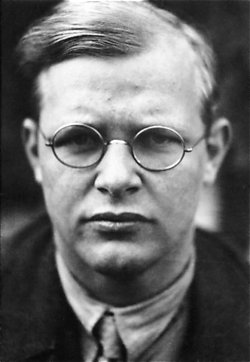
In the frenetic currents of modern digital life, where information proliferates at warp speed and opinions calcify into tribes, it is easy to feel a disquieting sense of déjà vu. We observe well-meaning individuals, seemingly intelligent and capable, falling prey to narratives that defy logic, embracing misinformation, and rejecting dialogue. The instinct might be to label this phenomenon as a failure of intellect, a widespread decline in critical reasoning. Yet, such a judgment often leads to unproductive partisan scolding, widening divides rather than bridging them. To truly understand this perplexing capture, we must turn to a voice from a darker chapter of history, one whose insights offer a profoundly compassionate yet unsparing structural critique: Dietrich Bonhoeffer.
The German theologian and anti-Nazi dissident, executed in 1945 for his resistance to Hitler’s regime, penned a remarkable essay from prison, analyzing how an entire populace could succumb to totalitarianism. He called this phenomenon “Dummheit” – stupidity – and his definition was crucially distinct from a mere lack of psychological intelligence. For Bonhoeffer, “stupidity” was a sociological problem, a spiritual and intellectual surrender. As he famously wrote, “Under the overwhelming impact of rising power, humans are deprived of their inner independence and… give up an autonomous position.” Eighty years later, Bonhoeffer’s chilling observations resonate with uncanny precision, offering an incisive framework to analyze the algorithmic echo chambers and mass media manipulation that define our present age. His theory allows us to shift from a posture of condemnation to one of analytical inquiry, explaining how good people can become psychologically captured by hyper-partisan rhetoric, not because they are inherently malicious, but because they have, often unwittingly, surrendered their independent thought.
The Peril of the Unthinking: Bonhoeffer’s Original Thesis
Bonhoeffer’s unique perspective on stupidity emerged from observing the rise of Nazism, a period when ordinary, seemingly decent people became complicit in horrific crimes. He recognized that this complicity was not always born of evil intent, but often from a profound intellectual inertia. “Stupidity,” Bonhoeffer argued, “is a more dangerous enemy of the good than malice.” This assertion initially startles, as we are conditioned to fear overt evil. Yet, Bonhoeffer understood that evil, in its overt forms, is recognizable; it wears a mask we can name, and against which we can rally. Lies can be exposed, injustice protested. But stupidity is far more insidious.
It is slippery, impervious to logic or reason. Try debating a truly unthinking person, Bonhoeffer noted, and facts bounce off, questions are ignored, and frustration mounts. The stupid person, confronted with contradiction, becomes “irritated and dangerous,” lashing out rather than engaging with inconvenient truths. Crucially, Bonhoeffer attributed this not to an individual’s innate intellectual capacity, but to social dynamics. “Every strong upsurge of power in the public sphere… infects a large part of humankind with stupidity,” he wrote. When an individual conforms to a group, a party, or an ideology under the overwhelming force of rising power, they risk abandoning their individual judgment. This is a form of moral laziness – a choice for slogans over genuine inquiry, for comfort over complexity. Tyrants, Bonhoeffer recognized, don’t need clever accomplices; they need compliant ones, individuals who can be guided, steered, and manipulated, becoming “perfect puppets” in the hands of malicious actors. This surrender of autonomy, this moral and intellectual abdication, was for Bonhoeffer the true peril, making the unthinking person a far more effective tool for destruction than the deliberately evil one.
Digital Power and the Erosion of Autonomy: The Algorithmic Echo Chamber
If Bonhoeffer saw the “overwhelming impact of rising power” in the totalitarian movements of his time, where do we find its modern analogue? Look no further than the pervasive digital ecosystems that define our contemporary public square. Social media platforms, with their intricate algorithms, wield a subtle yet profound power over what we see, hear, and ultimately believe. Designed to maximize user engagement, these algorithms meticulously curate our digital experience, constructing what we now recognize as algorithmic echo chambers and filter bubbles.
These systems, far from being neutral conduits of information, become sophisticated engines for the reinforcement of existing beliefs. Every click, every like, every shared post provides data points that refine a user’s profile, ensuring that future content aligns precisely with their established preferences. This personalization, while seemingly convenient, simultaneously deprives us of the “inner independence” Bonhoeffer warned about. Our feeds become self-fulfilling prophecies, serving up information that confirms our biases, effectively silencing dissenting voices and limiting exposure to alternative viewpoints. The result is a profound intellectual isolation, fostering a sense of tribalism where individuals are bound by shared beliefs, often at the expense of a nuanced understanding of critical issues. Facts are increasingly evaluated not on their objective merits, but on how well they adhere to pre-existing narratives. In this environment, the “autonomous position” Bonhoeffer prized withers, replaced by a comfortable, algorithmically enforced conformity.
Manufacturing Consent in the Digital Age: Mass Media Manipulation
Beyond the silent curation of algorithms, the deliberate act of mass media manipulation plays a pivotal role in shaping public consciousness, mirroring the “rising power” that concerned Bonhoeffer. In an age of abundant information, media outlets, particularly those with a partisan bent, can actively construct narratives, disseminate disinformation, and orchestrate public sentiment. This isn’t just about biased reporting; it extends to the strategic amplification of certain stories, the selective omission of others, and the weaponization of emotional triggers.
The internet’s architecture, with its rapid propagation and viral potential, provides fertile ground for such manipulation. Content, regardless of its factual basis, can quickly gain traction if it resonates emotionally or confirms existing biases. Algorithms, prioritizing engagement metrics, inadvertently become complicit, boosting emotionally charged misinformation into wider circulation. Troll farms and bot networks exploit these vulnerabilities, mimicking authentic engagement to artificially inflate the perceived popularity or legitimacy of false narratives. This creates a phenomenon known as false confirmation or circular reporting, where a single, unverified claim appears to be reported by multiple sources, lending it an illusory credibility. As these claims are repeated within insular communities – a process termed communal reinforcement – they gain acceptance not through evidence, but through sheer repetition and shared identity. In this landscape, individuals become, in Bonhoeffer’s chilling words, the “perfect puppet,” unknowingly participating in the spread of narratives designed to manipulate and control.
The Architecture of Moral Disengagement: Recognition and Resistance
To fully appreciate how digital capture occurs, one must look at how the digital architecture activates psychological mechanisms of moral disengagement—the cognitive tricks, as defined by Dr. Albert Bandura, psychologist, that allow ethical individuals to participate in collective harm without feeling guilt. Recognizing these subtle psychological maneuvers is the essential first step toward resisting them.
The first tactic is the diffusion of responsibility. In digital crowds, individual accountability dissolves into the ether of collective action. When participating in a viral pile-on, spreading an unverified rumor, or amplifying outrage, people tell themselves, “I am only retweeting what thousands of others have already said,” or “My single post doesn’t change anything.” To recognize this tactic, one must watch for the comfort of the digital crowd—the feeling that safety in numbers absolves personal responsibility. Resisting it requires an assertive reclaim of individual agency. Before sharing or commenting, one must ask: If I were the sole voice delivering this message, would I be willing to attach my name, conscience, and reputation to it?
The second tactic is the dehumanization of targets. Algorithmic feeds routinely flatten complex individuals into one-dimensional political caricatures or subhuman adversaries. Language shifts from critique of ideas to biological or mechanistic slurs—referring to opposing groups as vermin, parasites, bots, animals, or unthinking cultists. To recognize dehumanization, we must listen for the vocabulary of total contempt that strips opponents of moral worth and human vulnerability. Resisting dehumanization requires active humanization: deliberately pausing to remember that behind an opposing avatar sits an actual human being with families, fears, grief, and dignity. It demands refusing to use dehumanizing epithets, even when our digital tribe expects or rewards them.
The third tactic is the minimization of consequences. Digital interfaces create a sterile barrier between an action and its real-world fallout. Slander, harassment, and reckless disinformation are excused with casual dismissals: “It’s just a meme,” “It’s only the internet,” or “They brought it on themselves.” Recognizing this tactic involves identifying rationalizations that divorce online cruelty from its human collateral. Resisting it demands an honest consequence audit. We must recognize that words broadcast into the digital commons have tangible offline impacts—ruining livelihoods, fueling real-world violence, and destabilizing civic trust.
The Psychology of Digital Capture: Cognitive Biases
These moral disengagement tactics work in concert with deeper cognitive shortcuts. At the forefront is confirmation bias, an innate human tendency to favor, seek out, and interpret information that aligns with our existing beliefs, while dismissing contradictory evidence. Social media platforms supercharge this bias, creating an endless feedback loop where convictions are constantly affirmed, making it increasingly difficult to discern fact from fiction.
This is complemented by false consensus bias, where individuals overestimate the prevalence of their own views among others. Trapped within an echo chamber, one begins to believe that their particular tribe’s beliefs are universally accepted, rendering dissenting voices as fringe or bad-faith actors. Other cognitive shortcuts compound the issue: selective exposure (gravitating towards information that rewards our beliefs), selective perception (misinterpreting contradictory information), and selective retention (forgetting what doesn’t fit our worldview).
The danger is magnified by the illusion of control, the inaccurate belief that we can easily detect manipulation or deepfakes. Research consistently shows that overconfidence leaves users uniquely vulnerable to sophisticated deception. Furthermore, the escalation of commitment ensures that once an individual has publicly defended a narrative online, they are far more likely to double down on it when confronted with contradictory evidence rather than endure the social and emotional cost of admitting error.
The Cost of Comfort: Polarization and the Post-Truth Society
The consequences of this digital surrender are far-reaching and profoundly impact the fabric of democratic societies. The comfortable conformity of algorithmic echo chambers, combined with the strategic deployment of mass media manipulation, has driven unprecedented levels of political polarization. When individuals are insulated from diverse viewpoints and constantly affirmed in their existing beliefs, common ground erodes, and meaningful dialogue becomes nearly impossible. Different groups operate with entirely contradictory “facts,” leading to a society where fundamental shared realities are questioned.
This environment fosters a post-truth society, where appeals to emotion and tribal validation become more powerful tools than evidence-driven reporting. In such a landscape, spectacle and repetition outweigh verification, and narratives persist even when thoroughly debunked. This has profound implications for public discourse, making it harder to address collective challenges, from public health crises to climate change. Bonhoeffer’s warning that stupidity is a “dangerous enemy of the good” finds grim resonance here. When a significant portion of the populace is psychologically captured, unwittingly serving as “mindless puppets” for manipulative forces, the collective capacity for wise decision-making diminishes, jeopardizing social cohesion and democratic resilience.
Reclaiming Independence: Cultivating Thoughtfulness in a Manipulated World
Bonhoeffer, for all his stark warnings, was not without hope. He did not advocate for shaming the “stupid,” but rather for a courageous reclamation of thoughtfulness. His implicit call was for individuals to stand apart, to think critically, and to remain morally awake. In our digitally manipulated world, this translates into an urgent imperative to cultivate independence of thought.
The first step is a conscious effort to break free from the algorithmic loop. This means actively seeking out diverse sources of information, intentionally engaging with viewpoints that challenge our own, and resisting the allure of comfortable conformity. It requires critical thinking—questioning the origins of information, evaluating the motives behind narratives, and discerning factual evidence from emotional appeals. We must recognize the pervasive influence of our own cognitive biases and learn to pause before accepting or sharing information, especially if it strongly confirms our existing beliefs or triggers a powerful emotional response.
Developing digital discipline means understanding how algorithms work and how they influence our perceptions. It involves verifying facts, cross-referencing information, and being wary of sensational or emotionally charged content. Education in media literacy, starting from a young age, is vital for equipping individuals with the tools to navigate a complex information landscape. Bonhoeffer’s call to reclaim inner independence against the “overwhelming impact of power” means actively choosing intellectual rigor over moral laziness, complexity over slogans, and truth-seeking over convenient narratives. It is a conscious, continuous effort to exercise our autonomous position as thinkers, rather than passively allowing our thoughts to be molded by unseen forces.
Conclusion: A Call to Vigilance and Independent Thought
Dietrich Bonhoeffer’s profound theory of stupidity, born from the crucible of totalitarian oppression, offers a timeless and remarkably prescient lens through which to view the challenges of our digital age. It reframes the problem of misinformation and political polarization not as an indictment of individual intelligence, but as a compassionate, structural critique of how overwhelming digital power can deprive humans of their inner independence. When algorithms curate our realities, and mass media manipulation exploits our cognitive vulnerabilities, even well-meaning people can be psychologically captured, becoming unwitting participants in a post-truth society.
The legacy of Bonhoeffer compels us to recognize that the fight against disinformation is not merely a battle of facts, but a profound struggle for intellectual and moral autonomy. It asks us to look beyond simplistic blame and to understand the mechanisms of capture. His message resonates as a powerful call to vigilance and independent thought. In a world increasingly shaped by unseen digital forces, the courage to think for oneself, to question, to seek diverse perspectives, and to resist the seductive comfort of the echo chamber is not just a virtue—it is an essential act of freedom. As Bonhoeffer himself urged in his time, a challenge that remains as urgent as ever: don’t just fight evil. Refuse to be stupid.
Dr. Beaux Bonhoeffer
Find me also @beauxbonhoeffer.bsky.social and at beauxbonhoeffer.substack.com
Leave a Reply