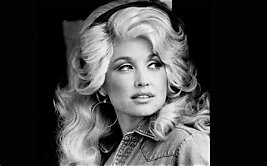
Many entertainers leave behind performances. Dolly Parton left behind permissions: permission to be flamboyant, poor, religious, ambitious, funny, feminine, strange, tender, successful, or different. Her kindness and acceptance of others set Dolly apart from most.
Dolly Parton leaves behind an extraordinary catalog of music, films, business ventures, jokes, wigs, rhinestones and self-deprecating one-liners. But the deepest part of her legacy may be less tangible: the repeated insistence that people deserve kindness instead of judgment, welcome instead of suspicion, and opportunity rather than pity.
She did not merely say nice things. She returned to the same moral vocabulary—love, acceptance, forgiveness, education, dignity and generosity—for decades. Then she built institutions around those words.
Parton’s public philosophy was simple enough to fit on a bumper sticker but demanding enough to shape a life: help people when you can, do not assume you know their burdens, and leave the world more hopeful than you found it.
“I like everybody”
One of Parton’s most direct statements about acceptance came in a 2016 interview with Vogue. Discussing the diversity of her audience—“gay and straight, black and white,” as the interviewer described it—Parton explained that fans knew she was not judgmental. “I like everybody,” she said, adding that she wanted not only to accept difference but to celebrate it.
That answer mattered because Parton’s audience has always crossed boundaries that American culture often treats as permanent. Country and pop fans, rural and urban listeners, conservatives and liberals, churchgoers and skeptics, older generations and young queer audiences have all claimed her.
Parton’s appeal is not that she erases difference. It is that she treats difference as something human beings can carry without forfeiting their right to be loved.
In the same interview, she said the country needed to become “a little more accepting, a little more forgiving, a little more harmonious.” That was not an abstract political slogan. It was a description of the social world she tried to create around herself: one in which people could disagree without becoming enemies and could be unusual without becoming targets.
Her language was often disarmingly plain. She did not present herself as a theorist. She presented herself as somebody who had been bullied, criticized and underestimated—and who had decided not to turn those experiences into permission to hurt other people.
“People are who they are”
Parton spoke particularly clearly about LGBTQ+ people and the importance of allowing individuals to live honestly. In a British Vogue interview, she said that many people around her were gay, lesbian and transgender, and that they were among her closest friends. She connected her position to her own childhood experiences of being bullied and not accepted. “People are who they are,” she said. “I try to find the God light in everybody.”
That phrase—“the God light in everybody”—captures the theological center of Parton’s compassion. Her Christianity was not chiefly a weapon for sorting the righteous from the condemned. It was a reason to look for worth in people, including people whom others had decided were unworthy.
She repeatedly urged people to be themselves rather than allowing parents, neighbors, churches or public opinion to define their identities. In a widely circulated interview, she also expressed the principle that people should be allowed to be who they are and love whom they love, while observing that she had enough problems of her own to avoid passing judgment on someone else.
There was humility in that argument. Parton did not claim moral perfection. She claimed limited jurisdiction. Judgment, in her view, belonged to God—not to strangers with microphones, television shows, or social-media accounts.
That distinction helped make her a source of comfort to generations of LGBTQ+ fans. Parton’s support was not always framed in the language of contemporary activism, and she was sometimes cautious about partisan labels. But her consistent insistence on love over condemnation provided something many people desperately needed: an unmistakable welcome from one of the most famous women in American popular culture.
In conversation with RuPaul, Parton summarized her affection for her audience with characteristic directness: “I love my fans, no matter who they are.”
No asterisk. No qualifying clause. No requirement that they first become more respectable, more conventional or more easily explained.
Kindness as a form of strength
Parton also understood that kindness is not passivity. She had a sharp tongue, a strong business instinct and an impressive capacity to survive condescension. She knew how to answer an insult with a joke—and how to turn being underestimated into a source of power.
But she did not confuse toughness with cruelty.
In an interview reflecting on her film Coat of Many Colors, Parton described the story as one about “family, hope, love, kindness, understanding and acceptance.” Those words could serve as a summary of the emotional architecture of her public life.
Her songs often gave dignity to people who had been discarded: abandoned women, exhausted workers, poor families, grieving children, lonely dreamers and people who had made mistakes. She did not write as though suffering made people noble automatically. She wrote as though suffering made them visible.
Even her humor was frequently generous. Parton joked about her appearance, her ambition, her poverty and the assumptions people made about blondes. The joke was usually on the stereotype, not on the vulnerable person. Her comedy created room for people to laugh without requiring someone else to be humiliated.
That distinction—between humor that releases tension and humor that inflicts pain—was another of her quiet gifts.
The Imagination Library: books as a promise
Parton’s most significant charitable achievement was Dolly Parton’s Imagination Library, launched in 1995 through the Dollywood Foundation in Sevier County, Tennessee, where she grew up. Inspired partly by her father’s inability to read or write, the program began by sending free books to children from birth to age five.
What began as a local effort became an international literacy movement. By 2025, the program had celebrated the distribution of more than 300 million books, and its reach continued to expand through 2026. It now serves children in the United States, Canada, the United Kingdom, Australia and the Republic of Ireland, with millions of books sent each month.
The brilliance of the Imagination Library is that it offers more than educational material. Each book arrives as a personal promise: you are worth investing in before you can read, before you can repay anyone, before you have demonstrated talent or achievement.
That is a radical idea in a society that often asks children to prove their potential before giving them resources.
Parton understood that poverty can limit a child’s access to books long before it limits a child’s imagination. Her program attacked that inequality directly. It did not ask whether a family had chosen the right school, lived in the right neighborhood or earned enough money. It simply placed a book in a child’s hands.
The program has received major recognition, including the Library of Congress Literacy Award, the David M. Rubenstein Prize and the Carnegie Medal of Philanthropy.
Yet Parton was more interested in the children than the trophies. She described the Imagination Library as meaning “as much, if not more,” to her than nearly anything else she had done.
That statement reveals the hierarchy of her values. Fame was useful. Wealth was useful. Business success was useful. But their highest purpose was to create something that outlasted applause.
Helping people stay in school
Before the Imagination Library became global, the Dollywood Foundation focused on education in Parton’s home county. In the early 1990s, she promised seventh- and eighth-grade students $500 if they graduated from high school. The initiative, known as the Buddy Program, helped reduce the dropout rate for those classes from 35 percent to 6 percent.
The amount may sound modest by celebrity standards. Its emotional significance was enormous. Parton was telling teenagers that somebody believed they could finish.
That belief was not sentimental. It was practical. A student deciding whether to remain in school may need money, transportation, encouragement, family support or simply one adult who refuses to treat failure as inevitable.
Parton provided a financial incentive, but she also helped awaken a community response. The program catalyzed additional local resources, demonstrating that philanthropy can be most effective when it encourages people nearby to participate rather than waiting for one wealthy benefactor to solve everything.
The foundation continues to offer scholarships, including annual awards for students in Sevier County. The current Dolly Parton Scholarship is listed at $15,000 for students pursuing further education.
Again, the recurring theme is possibility. Parton’s philanthropy did not merely distribute relief. It tried to widen the future.
The My People Fund
When wildfires devastated Sevier County in November 2016, destroying the homes of more than 1,000 families, Parton responded with unusual speed. Through the Dollywood Foundation, she created the My People Fund, which distributed $1,000 per month for six months to families who had lost their primary residences.
By May 2017, more than $12 million had been raised and distributed. Additional funds supported scholarships for high-school seniors whose homes had been destroyed.
The response was both emotional and administrative. Parton expressed sympathy, but she did not stop at sympathy. She created a mechanism for money to reach people quickly.
That practical compassion is a hallmark of her charitable record. She understood that people in crisis do not need to be turned into symbols of resilience before they receive help. They need housing, food, cash, medical care and the freedom to grieve without wondering whether they will survive financially.
The My People Fund also reflected her relationship to place. Parton’s fame took her around the world, but she remained tied to East Tennessee. She invested in the region through Dollywood and its related enterprises, helping create jobs and economic activity while treating local residents as neighbors rather than scenery.
A million dollars for vaccine research
In 2020, during the COVID-19 pandemic, Parton donated $1 million to Vanderbilt University Medical Center to support coronavirus research. Her gift helped fund work connected to the Moderna vaccine.
When Parton later received the vaccine, she celebrated the moment with a rewritten version of one of her best-known songs, turning public-health encouragement into a bit of Dolly-style theater.
The donation was important not simply because of its size, though $1 million is substantial. It was important because Parton used her platform to normalize trust in science and vaccination at a moment when confusion and misinformation were widespread.
She did not present herself as a medical expert. She did something more responsible: she supported experts and encouraged people to listen to them.
Parton’s explanation for her philanthropy was characteristically direct. Accepting the Carnegie Medal of Philanthropy in 2022, she said, “I just give from my heart.”
That phrase can sound almost too simple, but simplicity was part of her effectiveness. She did not pretend that generosity required perfect motives or grand philosophical systems. She saw a need, felt moved and tried to help.
Quiet giving and public responsibility
Parton’s best-known acts are only part of the story. Over the years, she supported educational programs, disaster relief, medical research, literacy initiatives and local communities. She also created opportunities through her businesses and used her celebrity to draw attention to causes that might otherwise have received less notice.
Her charitable work was sometimes public and sometimes deliberately private. That distinction matters. Philanthropy is often measured through announcements, totals and awards, but kindness frequently happens without a press release.
Parton’s example suggests that a generous life is not only a matter of writing large checks. It is also a matter of making room: hiring people, encouraging young artists, praising overlooked workers, welcoming outsiders and refusing to treat success as proof of superior worth.
She had every opportunity to become insulated by fame. Instead, she kept returning to ordinary human concerns. Her songs remained interested in rent, hunger, family, heartbreak, labor, faith and the small humiliations that can shape a life.
Why her words endured
Parton’s kindest statements endured because they were consistent with her actions.
When she spoke about acceptance, she ran a workplace and public persona in which many different kinds of people felt welcome. When she spoke about education, she sent books and funded scholarships. When she spoke about helping one another, she established disaster funds and donated to medical research. When she spoke about hope, she built programs that gave children concrete reasons to imagine a future.
That consistency made her difficult to dismiss as merely cheerful.
She was cheerful, certainly. But her optimism was not ignorance. Parton knew poverty, sexism, ridicule, grief and disappointment. She knew that talent does not guarantee fairness and that hard work does not erase structural obstacles.
Her hope was therefore an act of defiance. It said that cruelty is not the only realistic response to a cruel world.
Parton’s death on August 25, 2026, prompted tributes from musicians, actors, fans, educators and public figures. But perhaps the most revealing measure of her influence came from the people who described not merely admiring her, but feeling safer because she existed.
That is a rare legacy.
Many entertainers leave behind performances. Dolly Parton left behind permissions: permission to be flamboyant, poor, religious, ambitious, funny, feminine, strange, tender, successful or different. She gave people permission to remain soft without becoming weak.
And then she backed up that message with books, scholarships, emergency checks, medical research and decades of personal generosity.
The world has lost a remarkable singer and songwriter. It has also lost one of its most effective practitioners of public kindness.
Parton’s life makes a persuasive case that goodness need not be solemn, humorless or hidden. It can wear rhinestones. It can tell a dirty joke. It can run a theme park, write a ballad, fund a vaccine and mail a book to a child.
Above all, it can keep saying the same thing until people believe it:
You matter. You belong. Keep going.
Dr. Beaux Bonhoeffer
Find me also @beauxbonhoeffer.bsky.social and at beauxbonhoeffer.substack.com
Leave a Reply